AtlasCrime is (solely) an online publication.


On Thursday, two deadly shooting incidents in northern Honduras left at least 16 people dead, highlighting ongoing security challenges in the Central American nation.
The first attack occurred on a remote palm oil farm in Rigores, within the Trujillo municipality.
According to National Police spokesperson Edgardo Barahona, as many as 10 rural workers were shot dead, with the toll potentially rising. Distraught family members reportedly removed some bodies before investigators could fully secure the scene. Local media reported that armed assailants opened fire indiscriminately on labourers, including some gathered near a local church. Images from the site showed victims wearing work boots lying on the ground. One report indicated that three sisters were among those killed.
No clear motive has been established, but the region has long experienced agrarian conflicts. Human rights groups have noted that armed actors have repeatedly displaced farmers and workers from fertile land, leading to violent clashes.
In response, the head of Honduras’s Joint Staff of the Armed Forces, Hector Benjamin Valerio Ardon, pledged full military support (including personnel and logistics) to apprehend those responsible.
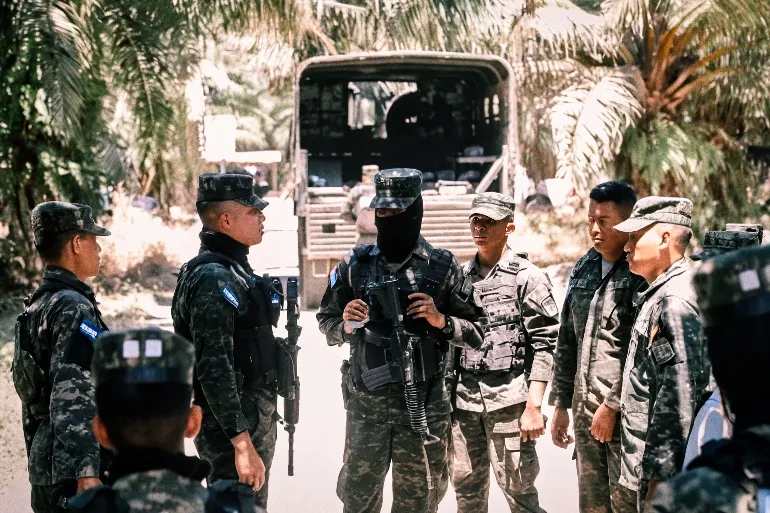
In a separate incident the same day in the Cortés department, near the Guatemalan border, six police officers were killed in what authorities described as an ambush in Omoa. The officers, from the Anti-Maras, Gangs and Organised Crime Directorate (DIPAMPCO), had traveled from Tegucigalpa for an anti-gang operation. They were fired upon while searching a building. A deputy commissioner named Lester Amador was among the dead. Some suspects may also have been killed or wounded.
Following the attacks, Honduras’s National Police announced immediate interventions in the affected areas, vowing to capture the perpetrators, protect communities, and deliver justice for the victims.
tHonduras previously maintained a prolonged state of emergency to combat crime, which began in 2022. Critics argued the measures eroded civil liberties and enabled human rights violations by security forces. The decree ended in January following the inauguration of President Nasry “Tito” Asfura, who has emphasized a tough stance on security. Asfura, an ally of U.S. President Donald Trump, attended a regional security conference in Florida in March.